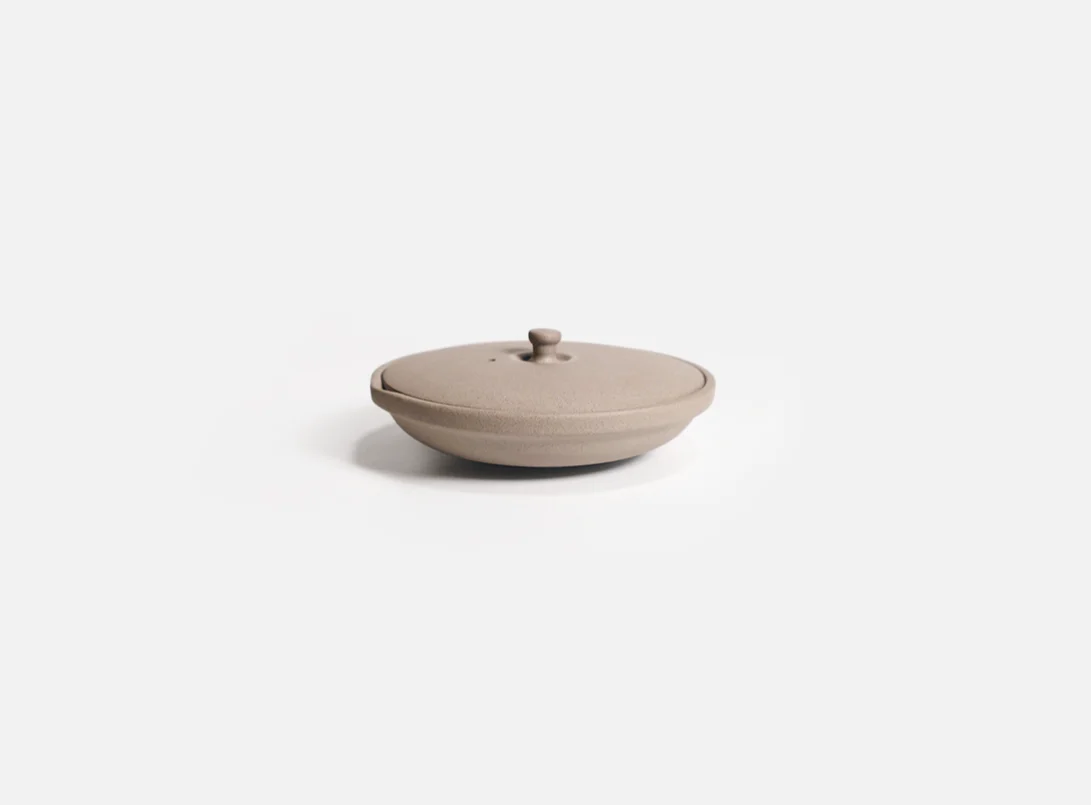
Jinsui Kiln: TUYU - SHIROHAI, Tokoname Shiboridashi Tea Pot (35ml, Gray)
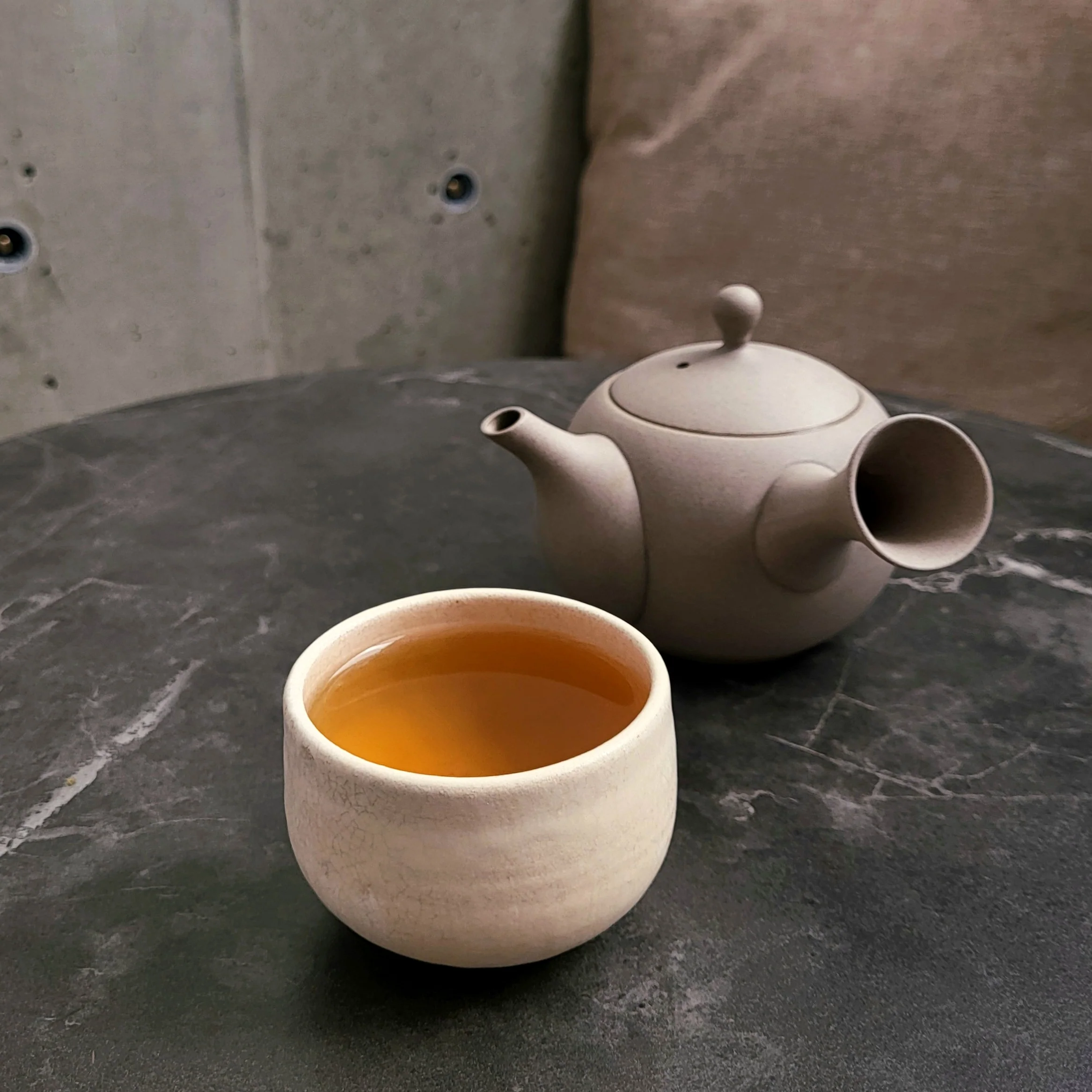
A shiboridashi kyusu tea pot by ceramics studio Jinsui, one of the six oldest studios in the Tokoname ceramic production region.
- Size: D100mm×H40mm
- Volume: 35 ml
- Material: Ceramic
- Tradition: Tokoname-yaki
- Region: Tokoname, Aichi, Japan
Note: All the measurements are approximate. Product color may slightly vary due to photographic lighting sources or your monitor settings.

This product has been tested to be free of lead and cadmium contamination. Do not use in microwave or dishwasher. Hand wash to clean.
About Jinsui
The name Jinsui combines the characters for “person” (人, jin) and “water” (水, sui), reflecting the idea that just as people need water to live, civilizations have always flourished where water is abundant. When the previous generation began producing teapots (kyusu), they embraced this philosophy and chose the name Jinsui to honor the essential relationship between humans and water.
How the color of the clay affects the taste of tea.
-
Black Clay
When fired, black clay remains relatively porous, meaning it doesn’t become fully dense. At a microscopic level, many tiny holes remain in the clay. These pores are said to absorb bitterness and off-flavors during brewing, resulting in a smoother, more mellow cup of tea. -
Gray Clay
Gray clay becomes denser when fired, and the pores shrink in size. This reduced porosity means less flavor absorption, allowing more of the tea's original character to come through in the taste. -
White Clay
White clay falls between black and gray in terms of porosity. Accordingly, the flavor profile of tea brewed in a white clay teapot is balanced — smoother than in gray, but truer to the original taste than in black.
Our Company
What makes our company special is that the average age of our craftsmen are in their 40s, so we can have long-term relationships with them. We have two inspection processes, so the quality is high, and because we have a large number of employees, we can produce a large number of products.
Traditional teapots are nice, but we want to work with a new sensibility, so we try to manufacture everything from classic teapots to modern teapots.
Our company's concept is to convey Japanese culture through teapots (kyusu), so we would like to have people who travel from overseas pick up our products and spread Japanese culture to the world.
Original: $0.61
-66%$0.61
$0.21Jinsui Kiln: TUYU - SHIROHAI, Tokoname Shiboridashi Tea Pot (35ml, Gray)
A shiboridashi kyusu tea pot by ceramics studio Jinsui, one of the six oldest studios in the Tokoname ceramic production region.
- Size: D100mm×H40mm
- Volume: 35 ml
- Material: Ceramic
- Tradition: Tokoname-yaki
- Region: Tokoname, Aichi, Japan
Note: All the measurements are approximate. Product color may slightly vary due to photographic lighting sources or your monitor settings.
This product has been tested to be free of lead and cadmium contamination. Do not use in microwave or dishwasher. Hand wash to clean.
About Jinsui
The name Jinsui combines the characters for “person” (人, jin) and “water” (水, sui), reflecting the idea that just as people need water to live, civilizations have always flourished where water is abundant. When the previous generation began producing teapots (kyusu), they embraced this philosophy and chose the name Jinsui to honor the essential relationship between humans and water.
How the color of the clay affects the taste of tea.
-
Black Clay
When fired, black clay remains relatively porous, meaning it doesn’t become fully dense. At a microscopic level, many tiny holes remain in the clay. These pores are said to absorb bitterness and off-flavors during brewing, resulting in a smoother, more mellow cup of tea. -
Gray Clay
Gray clay becomes denser when fired, and the pores shrink in size. This reduced porosity means less flavor absorption, allowing more of the tea's original character to come through in the taste. -
White Clay
White clay falls between black and gray in terms of porosity. Accordingly, the flavor profile of tea brewed in a white clay teapot is balanced — smoother than in gray, but truer to the original taste than in black.
Our Company
What makes our company special is that the average age of our craftsmen are in their 40s, so we can have long-term relationships with them. We have two inspection processes, so the quality is high, and because we have a large number of employees, we can produce a large number of products.
Traditional teapots are nice, but we want to work with a new sensibility, so we try to manufacture everything from classic teapots to modern teapots.
Our company's concept is to convey Japanese culture through teapots (kyusu), so we would like to have people who travel from overseas pick up our products and spread Japanese culture to the world.
Product Information
Product Information
Shipping & Returns
Shipping & Returns
Description
A shiboridashi kyusu tea pot by ceramics studio Jinsui, one of the six oldest studios in the Tokoname ceramic production region.
- Size: D100mm×H40mm
- Volume: 35 ml
- Material: Ceramic
- Tradition: Tokoname-yaki
- Region: Tokoname, Aichi, Japan
Note: All the measurements are approximate. Product color may slightly vary due to photographic lighting sources or your monitor settings.
This product has been tested to be free of lead and cadmium contamination. Do not use in microwave or dishwasher. Hand wash to clean.
About Jinsui
The name Jinsui combines the characters for “person” (人, jin) and “water” (水, sui), reflecting the idea that just as people need water to live, civilizations have always flourished where water is abundant. When the previous generation began producing teapots (kyusu), they embraced this philosophy and chose the name Jinsui to honor the essential relationship between humans and water.
How the color of the clay affects the taste of tea.
-
Black Clay
When fired, black clay remains relatively porous, meaning it doesn’t become fully dense. At a microscopic level, many tiny holes remain in the clay. These pores are said to absorb bitterness and off-flavors during brewing, resulting in a smoother, more mellow cup of tea. -
Gray Clay
Gray clay becomes denser when fired, and the pores shrink in size. This reduced porosity means less flavor absorption, allowing more of the tea's original character to come through in the taste. -
White Clay
White clay falls between black and gray in terms of porosity. Accordingly, the flavor profile of tea brewed in a white clay teapot is balanced — smoother than in gray, but truer to the original taste than in black.
Our Company
What makes our company special is that the average age of our craftsmen are in their 40s, so we can have long-term relationships with them. We have two inspection processes, so the quality is high, and because we have a large number of employees, we can produce a large number of products.
Traditional teapots are nice, but we want to work with a new sensibility, so we try to manufacture everything from classic teapots to modern teapots.
Our company's concept is to convey Japanese culture through teapots (kyusu), so we would like to have people who travel from overseas pick up our products and spread Japanese culture to the world.